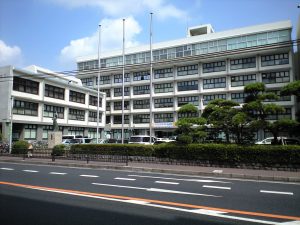
Ichikawa City Hall
Advancing Carbon Neutrality in a Japanese Municipality: Initiatives in Ichikawa City
Local authorities across Japan are increasingly taking a leading role in advancing decarbonisation. One notable example is Ichikawa City, a municipality in Chiba Prefecture, which has begun implementing a wide-ranging set of policies to promote carbon neutrality through energy, transport, infrastructure and community engagement initiatives.
A Commitment to Carbon Neutrality
In February 2022, Ichikawa City formally declared its ambition to become a carbon neutral city by 2050, committing to reduce net carbon dioxide emissions to zero. Since making this declaration in the city assembly, the municipality has been steadily developing concrete policy frameworks and implementation mechanisms to achieve this goal.
A central pillar of the city’s strategy has been the restructuring of its local energy system, combined with policies that encourage behavioural change among residents and businesses.
Establishment of a Local Energy Company
A flagship initiative has been the establishment of Ichikawa Clean Energy Co., Ltd., created in January 2025 as a regional electricity company. The company was jointly established by the city government together with private sector partners including Keiyo Gas and Chiba Bank.
The purpose of this new entity is to supply clean electricity with environmental value to the local area while also strengthening the circulation of economic activity within the city. By retaining energy-related spending within the local economy, the initiative supports both decarbonisation and regional economic development.
Rather than simply changing the way electricity is procured, the creation of the company represents a broader attempt to integrate climate policy with local economic policy. Local energy generation and supply are therefore positioned as a mechanism for both reducing emissions and supporting local economic resilience.
Designation as a National Decarbonisation Leading Area
In May 2025, Ichikawa City received further recognition when it was selected as part of the sixth round of “Decarbonisation Leading Areas” by the Ministry of the Environment.
This national designation provides municipalities with financial support and institutional backing from the central government to accelerate the deployment of renewable energy and energy efficiency measures. For Ichikawa City, the selection created favourable conditions for expanding renewable energy capacity and implementing wider energy-saving measures.
Decarbonising Public Infrastructure
Within the designated area, the city is prioritising the decarbonisation of public facilities such as municipal buildings and community infrastructure. These facilities are being used as demonstration sites to promote energy efficiency and renewable energy adoption.
At the same time, the city is working to “green” local infrastructure more broadly, including improvements to energy management systems across districts. The goal is to develop more integrated, area-wide energy management that allows energy demand and supply to be coordinated more efficiently at the community level.
Sustainable Local Transport
Transport policy is another area where the city is pursuing innovative approaches. Ichikawa has introduced a demand-responsive shared taxi service, designed to provide flexible transport options while reducing environmental impact.
Demand-responsive transport systems allow passengers to book shared vehicles that adjust routes based on passenger demand, improving efficiency compared with conventional fixed-route services. The system is particularly aimed at maintaining mobility for older residents while reducing reliance on private car use.
By addressing both accessibility and emissions reduction, the initiative reflects the city’s attempt to balance environmental goals with social needs. Ensuring that elderly residents and those without access to private vehicles can travel easily remains a key policy priority.
Community Engagement and Environmental Education
Ichikawa City has also placed strong emphasis on public engagement and environmental education. Local authorities recognise that achieving carbon neutrality requires not only technological change but also shifts in behaviour and public awareness.
The city therefore promotes environmental education through schools and community programmes, while also hosting events that encourage residents to participate in climate action. These initiatives aim to build a shared understanding of the importance of decarbonisation and encourage practical action at the household level.
Support for Homes and Businesses
In addition, the city provides financial support to households and businesses to encourage the adoption of energy-efficient and renewable energy technologies.
Subsidy programmes support the installation of solar photovoltaic systems, high-efficiency equipment and other technologies that reduce energy consumption or generate clean energy. Through these measures, the city aims to accelerate emissions reductions in both the residential and commercial sectors.
A Multi-Layered Approach to Decarbonisation
Taken together, Ichikawa City’s initiatives represent a multi-layered strategy that combines structural changes in energy supply with actions across public infrastructure, transport, education and the private sector.
The establishment of a regional electricity company and the city’s designation as a national Decarbonisation Leading Area form the twin pillars of this approach. By integrating institutional frameworks, funding mechanisms and stakeholder collaboration, Ichikawa City has moved from policy planning to the implementation phase of its 2050 carbon neutrality target.
For local governments in other countries, including the United Kingdom, Ichikawa’s experience illustrates how municipal authorities can coordinate energy, transport and community initiatives to advance decarbonisation while simultaneously strengthening local economic systems.
Picture: ウェルワィ at Japanese Wikipedia, CC BY 3.0