Enabling regional growth: Governance, Fiscal and Collaboration Lessons from England and Japan
Dr Abigail Taylor, Business School, Research Fellow, City-REDI University of Birmingham
 In 2025, the City-Region Economic Development Institute (City-REDI) at the University of Birmingham, CIPFA, and the Otemon Gakuin University led new Japan–UK comparative research examining shared challenges and opportunities in local governance and finance. This work was supported by the Japan Local Government Centre and funded by the Daiwa Anglo-Japanese Foundation, the Great Britain Sasakawa Foundation and the Japan Foundation Endowment Committee.
In June 2025, we published a report entitled Enabling Regional Growth: Institutional & Fiscal Lessons from England and Japan. Available in English and Japanese, the report is based on a desk review of funding and governance in England and Japan, complemented by study visits to Osaka and the West Midlands in 2024 that included interviews with government, academic, and policy stakeholders. It draws comparative insights from two prominent second cities – Birmingham in England and Osaka in Japan – and explores four key dimensions:
- institutional conditions that support growth
- formation of regional groupings
- funding mechanisms
- approaches to monitoring and evaluation.
Launched at an event in Birmingham attended by members of the JLGC London office, key findings in the report include that:
- stable institutions are essential for long-term regional impact, with Japan’s consistent governance and formalised processes contrasting with England’s frequent institutional changes and ad-hoc devolution deals.
- Flexible regional groupings, built on economic relationships, shared identity, and leadership, prove more effective than rigid boundaries, with the West Midlands Combined Authority and the Union of Kansai Governments demonstrating how municipalities can work together at a broader regional level.
- Equitable and empowering funding is critical to supporting the development of second cities. Japan’s Local Allocation Tax system plays a central role in equalising fiscal capacity among Japanese municipalities. Another key strength of the Japanese local fiscal system is the flexibility and autonomy it provides to local governments allowing them to respond swiftly to socio-economic changes and local needs. In the West Midlands, the introduction of the Integrated Settlement was welcomed for devolving greater power and establishing a single, departmental-style multi-year funding settlement, replacing multiple project-specific grants with a lump-sum allocation. Nonetheless, both models raise questions of capacity and fairness. Experiences in Japan illustrate ongoing oversight of revenue streams and their distribution, coupled with adjustments to allocation systems are important to prevent disincentives for local development and to ensure that municipalities of all sizes and wealth levels can deliver core services. England is moving toward selfsustaining regional funding, through greater local revenue and fiscal autonomy, but the model faces risks for weaker authorities, reliance on council tax, and persistent disparities.
- Monitoring and evaluation must move beyond compliance to embed learning and track long-term outcomes, requiring consistent data, capacity, and shared responsibility across government levels. The West Midlands Combined Authority offers valuable insights into practice through how it is seeking to use robust monitoring and evaluation as an accountability mechanism to support greater devolution via the West Midlands Outcomes Framework.
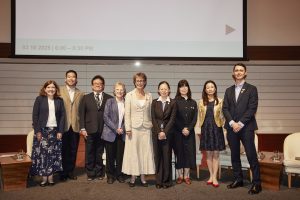
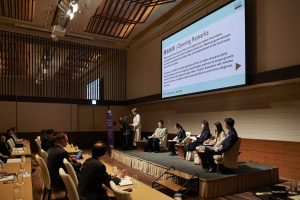 In autumn 2025, we returned to Japan to host an event in conjunction with the Royal Society of Arts. Designed to complement the UK Government’s World Expo 2025 campaign to strengthen collaboration between the UK and Japan, the event convened leaders from government, academia, and civil society to explore governance and funding arrangements that enable effective regional growth. Speakers included Michael Blyth (UK Consul General Osaka), Carolyn Davidson (Commissioner General for the UK at Expo 2025 Osaka Kansai), Professor Toshihiko Ishihara (President of CIPFA Japan), Miki Konishi (United Nations University-Institute for the Advanced Study of Sustainability), Keiko Murakami (Deputy Director General, International Affairs Department, METI Kansai), and Yumi Nishijima (Director, Union of Kansai Governments). The event was chaired by Jeffrey Matsu (Chief Economist, CIPFA) and concluding remarks were provided by Anne Green and Abigail Taylor (Professor and Research Fellow, City-REDI, University of Birmingham).
During the trip, we also commenced a new phase of research investigating how mechanisms and policies can support partnership working across tiers of government, particularly in response to demographic challenges. Through interviews with 11 senior practitioners and academics, the research aims to:
- Identify learning from Japanese approaches to staff mobility and governance.
- Explore Japan’s debates on wide-area service coordination.
- Assess the transferability of these approaches internationally.
 We followed up these interviews with a roundtable hosted by the JLGC in December 2025 and further interviews, exploring how Japan’s system of rotating government staff across roles and tiers facilitates collaboration, balances individual and institutional benefits and challenges, and enables the leveraging of local expertise for broader regional cooperation. We are developing a policy briefing and journal article on this topic.